Steritherm PHE
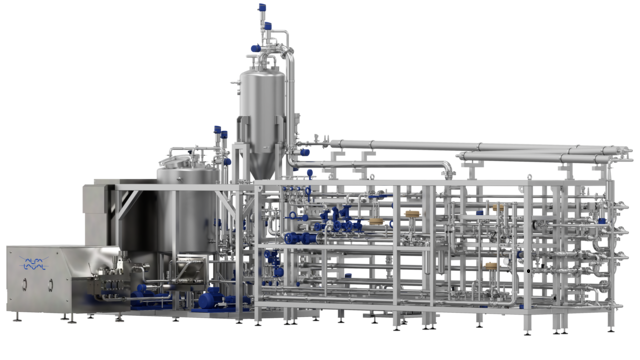
Enhance product microbiological stability by inactivating unwanted microorganisms in process fluids that can causes spoilage. The Alfa Laval Steritherm PHE sterilizes process fluids through a combination of efficient, high temperature heat transfer and holding time. Pre-assembled and skid-mounted, this aseptic thermal module ensures product quality and safety.
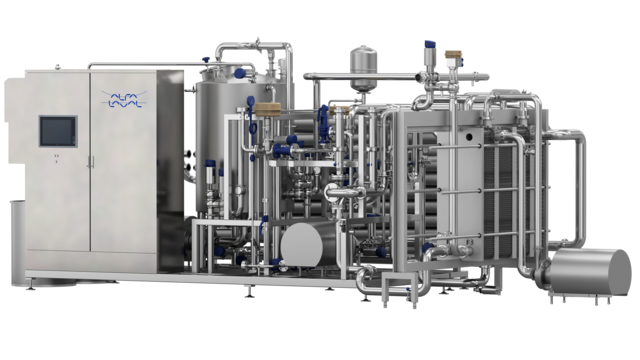
Premium plate sterilizer for heat-sensitive products and high heat recovery
- Maximize energy recovery and reuse
- Gentle sterilization of food products
- Space-saving installation for highly efficient sterilization of dairy, food and beverage products
- Global expertise with local support and service
Sterilize your food products – safely, reliably and consistently using the Alfa Laval Steritherm PHE. Pre-tested and validated, this premium plate sterilizer boosts product stability by killing or inactivating microorganisms that cause spoilage. The result? Product uniformity, consistency and integrity.
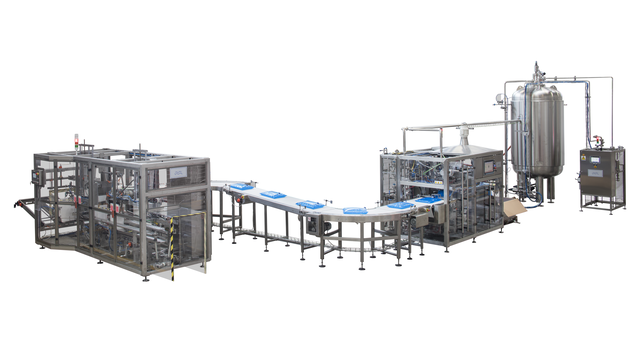
Flexible and modular, the Steritherm PHE adapts to process requirements and provides accurate 24/7 control of all sterilization parameters. An integral component of any aseptic food packaging line, it easily connects to aseptic tanks and aseptic filling machines, adjusting to variations of the aseptic process.
Optimize food safety and add flexibility to your production processes with the Alfa Laval Steritherm PHE.
How the plate sterilizer Steritherm PHE works
How the plate sterilizer Steritherm PHE works
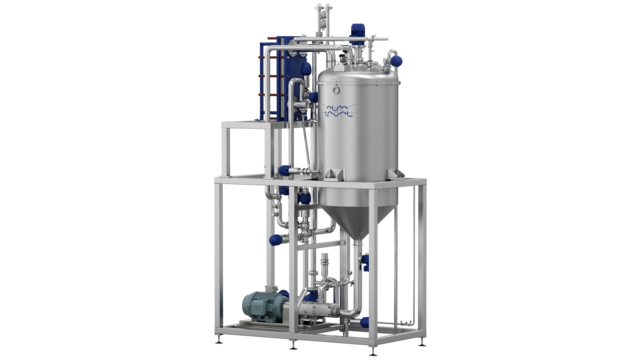
The plate heat exchanger consists of a pack of stainless-steel plates mounted in a frame with separate sections for pre-heating, final heating, and cooling.
Corrugated plates with unique plate patterns optimize heat transfer. Supporting points on the plate hold the plates apart and form narrow channels between them. The liquids enter and leave the channels through ports in the plate corners. Varying patterns of open and blind holes route fluids from one channel to the other. Gaskets around the plate edges and the ports form the channel boundaries, preventing external leakage and internal mixing.
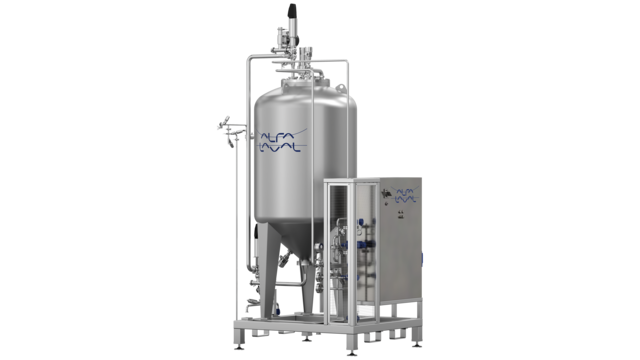
Balance tank
Before production begins, the Steritherm PHE undergoes sterilization-in-place (SIP) using superheated water at 125°C (257°F). Thirty minutes after sterilization, the product flows through the balance tank into the module. A programmable logic controller regulates pump speed, transferring the product to maintain a constant feed rate to the heat exchanger based on signals from a flow meter. A temperature transmitter and a pressure transmitter monitor the inlet product temperature and tank pressure.
Pre-heating by direct regeneration
Direct energy recovery pre-heats the incoming untreated product, reducing the demand for heating and cooling media. The hot sterilized product raises the temperature of the cold incoming product in the regenerative heat exchanger. The treated product is maintained at a higher pressure than the untreated product to prevent cross-contamination.
Final heating to the sterilization temperature
Final heating is achieved through hot water recirculation. A dedicated hot water set generates hot water using steam. A temperature transmitter monitors the product temperature at the heat exchanger outlet and adjusts the steam supply via a modulating valve to maintain precise control.
The temperature difference between the hot water and the product is kept very low to prevent product burning and reduce plate fouling. Once the product reaches the desired sterilization temperature, it is held in an insulated holding cell to ensure consistent and effective sterilization.
Cooling
The product cools to the final temperature in two stages. First, the regeneration section mentioned above cools the product. The second and last stage uses a cooling medium, chilled water, ice water, or propylene glycol, depending on the requirements, to cool the product to the desired outlet temperature. A temperature transmitter controls the chilled media, measures the product's outlet temperature, and sends commands to the modulating valve on the cooling media pipeline.
Cleaning-in-place
Under normal operating conditions, all product-contact surfaces are cleaned in place without requiring module disassembly. Recommended cleaning intervals vary, depending on the product type and processing temperatures.
Control system
Automated operation controls start and stop functions, set point, and piping and instrumentation diagram (P&ID). Control parameters can be reviewed and adjusted. The system displays relevant process data, including as plant status, real-time temperatures, and flow rates, and alarm status.
Products
Food system services
Alfa Laval Food system services help extend the performance of your food systems by maximizing the performance of your processes. This enables you to:
- Continually improve your operations to maintain competitive advantage
- Focus on uptime, optimization and availability
- Maximize return on investment throughout the life cycle of your food systems
Learn more about our service offer for food systems