
RO spiral
Les membranes d'osmose inverse à spirale d'Alfa Laval sont des solutions éprouvées et à faible consommation d'énergie pour concentrer les flux d'alimentation, particulièrement adaptées aux produits thermosensibles. Les membranes d'osmose inverse à spirale peuvent également être utilisées pour la pré-concentration avant évaporation, ainsi que pour la récupération du produit et de l'eau depuis les flux de perméat et l'évaporateur de condensât.
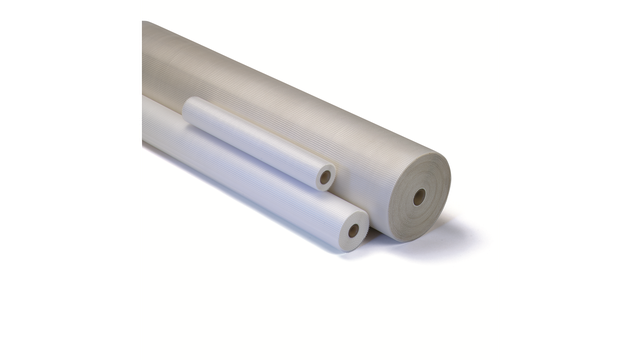
Conception et technologie de membrane éprouvées pour améliorer votre processus d'osmose inverse
- Fonctionnement économique grâce à une faible consommation d'énergie
- Efficaces – couvrant un large éventail de perméabilités au sel
- Faible encombrement au sol grâce à sa conception compacte
- Extrêmement durables – excellentes stabilités chimique et thermique avec une durée de vie jusqu'à plusieurs années
- Flexibles – disponibles dans différentes combinaisons de longueur, de diamètre et de taille d'entretoise
L'expérience d'Alfa Laval en matière de technologie membranaire est aussi longue que la technologie de filtration membranaire elle-même (plus de 50 ans). Sur la base de nos connaissances et de notre expérience dans la technologie membranaire, nous proposons deux séries de membranes RO avec des propriétés de rejet de NaCl différentes pour s'adapter à votre processus et à votre application. Les membranes à spirale, qui sont fabriquées dans notre propre usine spéciale, se fondent sur une construction unique en polyester ou en polypropylène et une conception sanitaire parfaitement adaptée qui offre des conditions de nettoyage optimales. Les membranes d'osmose inverse sont disponibles à la fois planes (pour la filtration ou les travaux de laboratoire) et à spirale (pour les applications plus importantes), ce qui représente un avantage lors de votre passage à une production supérieure.
About our reverse osmosis membrane range
RO PE Series
- The reverse osmosis spiral membranes of the RO PE series, RO99 and RO90, have a NaCl rejection of ≥98% and ≥ 90% respectively.
RO98 pHt™ Series
- This version has a pHt™ spiral reverse osmosis membrane that tolerates temperatures and pH higher than the RO PE series. The RO98 pHt™ has a NaCl rejection of ≥ 98%.
All types are USDA approved and comply with major international regulations, including EU (EC) 1935/2004, EU 10/2011, EU (EC) 2023/2006 and FDA CFR Title 21. Upon request. we can offer products with Halal certificates.
Should you need to evaluate which membrane type your process requires, Alfa Laval reverse osmosis RO membranes are also available as flat sheet membranes to be installed in plate-and-frame membrane modules for screening or lab work.
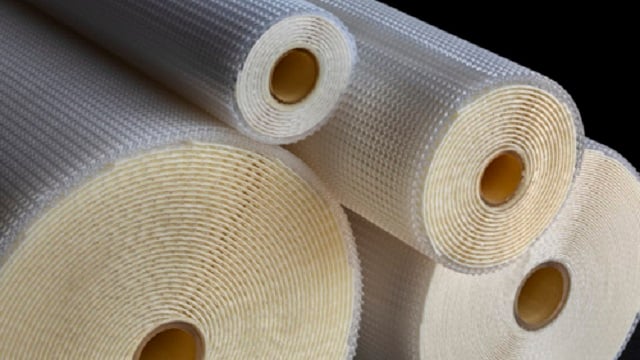
Our RO spiral membrane materials are compliant with all major regulations
Our spiral wound membrane materials are compliant with all major regulations
All membrane materials used for both flat sheet and spiral wound membrane configurations meet EU Regulation (EC) 1935/2004, EU Regulation 10/2011, EU Regulation (EC) 2023/2006 and FDA regulations (CFR) Title 21, and are suitable for use in food and pharmaceutical processing applications. Compliance also extends to the related equipment and fittings, including items such as plate-and-frame units, element housings and pumps, supporting safe and efficient spiral membrane filtration in a wide range of industries.
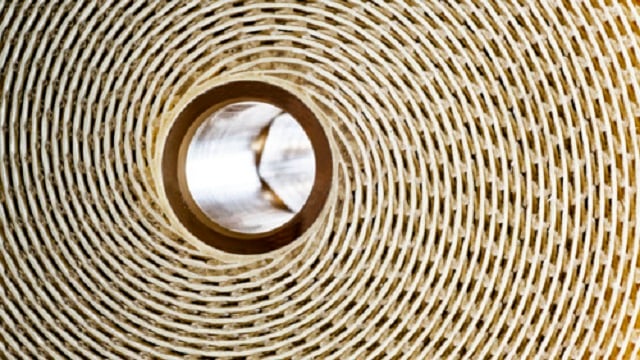
Fonctionnement
The basic technology behind membrane filtration involves using a semi-permeable membrane to separate a liquid into two distinct streams.
Pumping this liquid across the surface of the membrane creates a positive trans-membrane pressure that allows any components smaller than the porosity of the membrane to pass through, forming the permeate.
Any components larger than the pore size simply cannot pass through, and remain behind in what is called the retentate. The surface of the spiral wound membrane is kept free of blockages by the force of the liquid flow moving parallel to the membrane surface.
Construction of the RO spiral membrane
Efficient spiral membrane filtration
A spiral membrane comprises of several membrane 'envelopes' with two membrane sheets separated by a permeate spacer mesh, each glued to a central permeate collection tube.
Between each pair of envelopes there is a spacer which creates the feed channel, allowing the feed to flow across the length of the spiral wound membrane, whilst the permeate passing through the membrane into the membrane envelope flows in a spiral pattern to the permeate collection tube.
Red = Feed/retentate.
Green = Permeate.
The flow pattern in an RO spiral membrane where red represents the feed/retentate and yellow the permeate.