
MF spiral
Les membranes de microfiltration à spirale (MF) d'Alfa Laval sont des solutions éprouvées pour l'élimination efficace des solides dispersés. L'architecture unique et la conception hygiénique et parfaitement ajustée du châssis en polypropylène assurent une filtration optimale. Il existe différents types de membranes de microfiltration et diverses combinaisons de longueur, de diamètre et de taille d'entretoise d'alimentation pour assurer que votre application fournisse de bonnes performances.
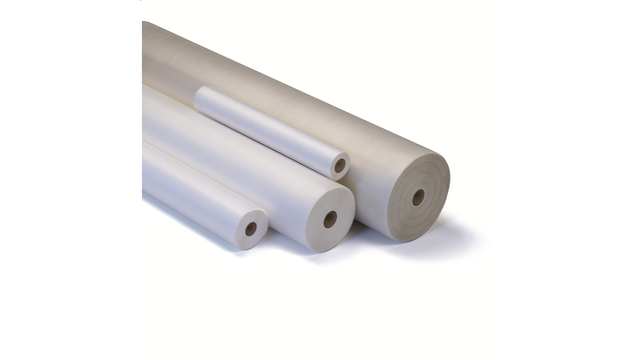
Filtration efficace sans affecter l'équilibre des composants dissous dans le flux
- Fonctionnement économique grâce à une faible consommation d'énergie
- Efficaces – pas besoin de remplacer/d'éliminer les cartouches ou les consommables utilisés dans la filtration frontale traditionnelle.
- Extrêmement durables – excellentes stabilités chimique et thermique et durée de vie jusqu'à plusieurs années
- Flexibles – adaptées à une large gamme de matériaux de membrane et de tailles de pores
- Encombrement au sol minimal - conception compacte
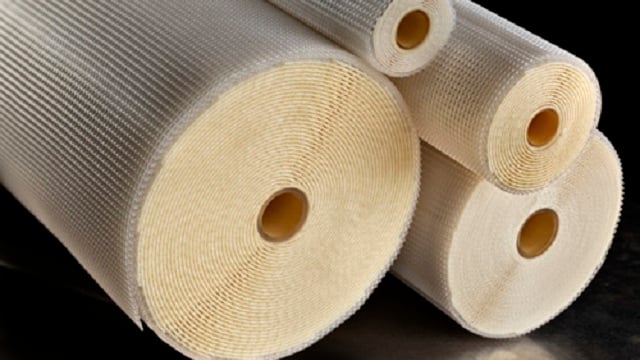
A wide range of microfiltration membranes
The microfiltration membranes are available in two different materials and a number of pore sizes to ensure that you find the right one for your application.
MFG series
The MFG microfiltration membrane is made of polysulphone polymer. The MFG1 pore size is 0.1 µm while the MFG2 is 0.2 µm.
MFP series
The MFP microfiltration membrane is made of fluoro polymer. MFP2 has a pore size of 0.2 µm and MFP5 of 0.5 µm.
We can offer products with Halal certificates upon request.
Our microfiltration membrane materials are compliant with all major regulations
Our spiral wound membrane materials are compliant with all major regulations
All membrane materials used for both flat sheet and spiral wound membrane configurations meet EU Regulation (EC) 1935/2004, EU Regulation 10/2011, EU Regulation (EC) 2023/2006 and FDA regulations (CFR) Title 21, and are suitable for use in food and pharmaceutical processing applications. Compliance also extends to the related equipment and fittings, including items such as plate-and-frame units, element housings and pumps, supporting safe and efficient spiral membrane filtration in a wide range of industries.
Fonctionnement
The basic technology behind membrane filtration involves using a semi-permeable membrane to separate a liquid into two distinct streams.
Pumping this liquid across the surface of the membrane creates a positive trans-membrane pressure that allows any components smaller than the porosity of the membrane to pass through, forming the permeate.
Any components larger than the pore size simply cannot pass through, and remain behind in what is called the retentate. The surface of the spiral wound membrane is kept free of blockages by the force of the liquid flow moving parallel to the membrane surface.
Construction of the microfiltration spiral membrane
Efficient spiral membrane filtration
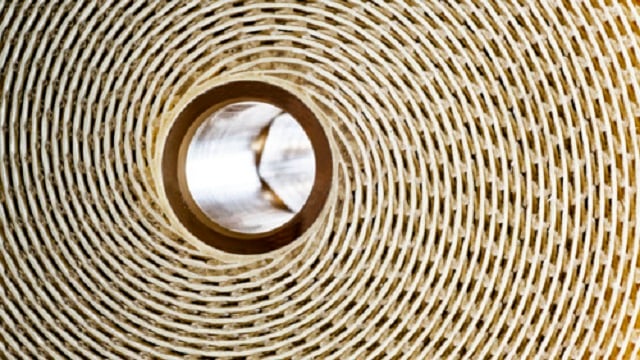
A spiral membrane comprises of several membrane 'envelopes' with two membrane sheets separated by a permeate spacer mesh, each glued to a central permeate collection tube.
Between each pair of envelopes there is a spacer which creates the feed channel, allowing the feed to flow across the length of the spiral wound membrane, whilst the permeate passing through the membrane into the membrane envelope flows in a spiral pattern to the permeate collection tube.
Red = Feed/retentate.
Green = Permeate.
The flow pattern in a MF spiral membrane where red represents the feed/retentate and yellow the permeate.